


CBAM Becomes Reality in 2026: Rosenberg Warns, “Importers Are Not Prepared”
by Dagmar Dieterle

Despite major uncertainties, incomplete data and the risk of millions in additional costs, most importers and traders are nowhere near prepared. Rosenberg calls for immediate action across the entire supply chain.
CBAM is coming – and it will be on time

In his presentation, Rosenberg addressed what many market participants still refuse to believe: CBAM will start on 1 January 2026, with no extension or grace period. Although delays in publishing benchmarks, default values and reporting guidelines have caused confusion, they do not change the legal reality. Every tonne of steel imported from the start of the year will create a financial obligation that must be settled in 2027 through the surrender of CBAM certificates.
Rosenberg warned against a widespread misconception: While payments are due later, the liability begins from the first day of import. Hopes for political relief – including speculation about intervention by the U.S. government – are dangerous illusions.
Default values, benchmark uncertainty and rising CO₂ costs
A major challenge, according to Rosenberg, is extreme data uncertainty. EU default values are dynamic, often set very high and updated continuously. Companies that cannot provide reliable emissions data from their suppliers must expect significant additional costs.
On top of that, the CO₂ price in the EU ETS exceeded €80 per tonne in December 2025 and, according to many analysts, could rise substantially over time. This makes CBAM a strategic cost factor that will permanently reshape the competitiveness of imported goods.
 Importers largely unprepared – entire organisations affected
Rosenberg criticised that many market participants still underestimate the scope of CBAM. Most importers lack robust data structures, revised supplier contracts, updated procurement calculations or adapted internal processes. CBAM is not an additional customs formality; it is an ongoing business process affecting procurement, sales, customs, finance and risk management alike.
Companies must therefore immediately:
- collect supplier data and production routes,
- integrate CBAM clauses into contracts,
- adjust pricing models,
- plan financial provisions,
- establish internal competence teams (“CBAM Working Groups”).
Conclusion
 CBAM represents a profound paradigm shift in European trade: from 2026 onward, the import of steel and steel-intensive goods will be shaped not only by tariffs and quotas, but also by a CO₂ price at the border. The associated risks are significant – especially for companies relying on postponement or political easing.
Rosenberg’s core message: “CBAM starts on January 1. Many are not ready. Those who fail to act now will pay the price later.”
CBAM ushers in a new era in which transparency, data quality and CO₂ management determine competitiveness. Companies that act early can reduce costs and mitigate risks. Those who wait risk entering an unpredictable cost regime from 2026 onwards.
Source and photo: Eurometal – European Federation of Steel, Tube and Metal Distribution and Trading
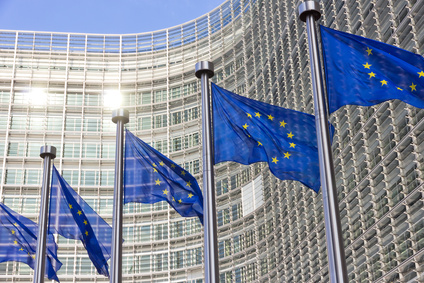
Fotos Europe: fotolia