


Feralpi is committed to achieving climate neutrality by 2050. What political conditions need to be created?
by Dagmar Dieterle-Witte
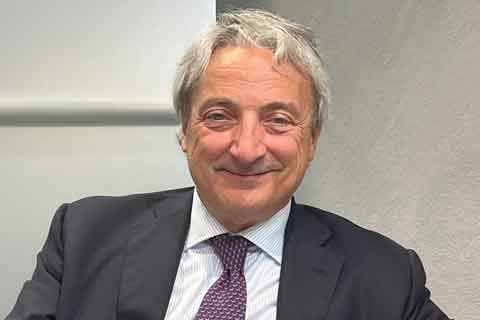
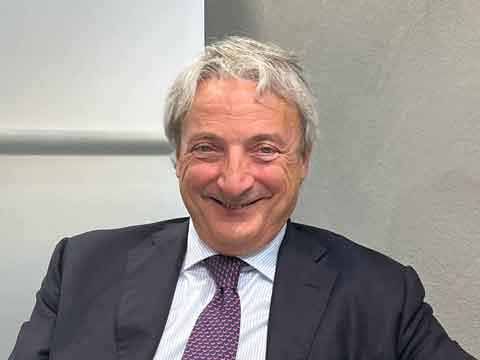
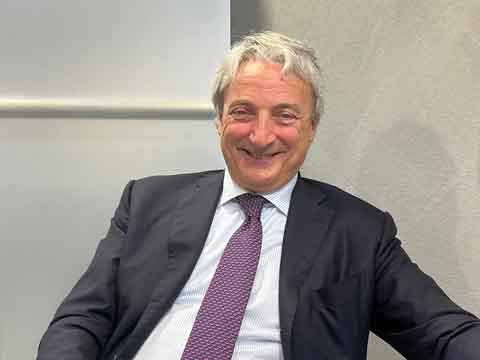
Interview Feralpi, Mr. Giuseppe Pasini, Chairman of the Board of Directors of the Feralpi Group.
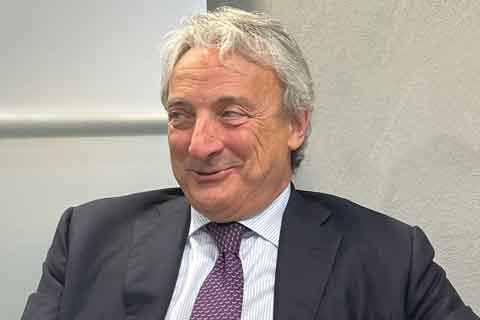 marketSTEEL: Mr. Pasini, you are planning to achieve climate neutrality by 2050 - an ambitious goal. What political conditions need to be created so that this goal can realistically be achieved?
In this complex geopolitical environment, there is an urgent need for a uniform energy policy in Europe. The expansion of renewables must become faster and simpler - less bureaucracy and more efficiency are needed. New technologies such as modern nuclear energy should also be discussed objectively and not blocked ideologically.
In terms of the primary route, our electric steelworks already emit only a fifth of the CO2 emissions per tonne of steel. We could emit even less CO2 using the electric arc process. To achieve this, we would have to be able to cover as much of our current electricity requirements as possible with renewables. This would reduce CO2 emissions according to Scope 1 and Scope 2 without further investment in our plant - in other words, we would need an ever-increasing proportion of renewable energies in the available electricity mix in the future.
The Feralpi Group's ranking among Europe's Climate Leaders in the Financial Times 2025 already shows continuous improvement. In particular, the reduction in direct and indirect emissions from energy consumption amounted to -30.8% in the years 2018-2023 analyzed. In addition, in 2024, the Feralpi Group was the only steel company in Italy and one of the few in Europe to have its medium-term (2030) climate targets validated by the international scientific body SBTi (Science Based Targets initiative).
We offer innovative and sustainable solutions for the global steel supply chains through a diversified, verticalized and flexibility-focused company. From ESG strategy to major investments, we manufacture products for our customers that are recognized industry-wide as “best-in-class” in terms of EPD (Environmental Product Declaration) and minimum recycled content. We summarize all this in one word: FERGreen.
marketSTEEL: What barriers do you currently see to decarbonization and to what extent can European policy intervene to help overcome these challenges?
The biggest barrier for us is the high proportion of production costs, which is due to factors outside of our company's control. We see an urgent need to tackle the problem of high energy prices. They are a massive burden on the competitiveness of our industry. We must also recognize scrap as a strategic raw material for the circular economy and resilient industrial production. The export of scrap should be stopped in Europe from the outset. Only with targeted support in these two areas can we as a steel company develop our full potential and make a significant contribution to a prosperous and sustainable future for Germany and Europe.
marketSTEEL: What importance do you give to green hydrogen in the European strategy to reduce emissions? What concrete measures do you think the EU should take to promote its use?
The launch of the new rolling mill in Riesa is an expression of our long-term vision and our ongoing commitment to investing in advanced technologies. This will strengthen our competitiveness on the global market and enable us to pursue ever more sustainable production. With our new rolling mill, we are already achieving climate neutrality in terms of direct emissions (Scope 1).
Green hydrogen can certainly replace natural gas in the future; here, too, it depends on the price. We need political support for the conversion of the steel industry. After all, hydrogen is currently neither available in sufficient quantities nor economically competitive. It cannot be the only solution - one-sided technological dependencies would be risky.
If we are to replace natural gas with hydrogen in the production process, it must be affordable and come from green sources. We need simple capex support programs that we as a medium-sized company can implement in our investment decisions. In the electric steel process in particular, the current costs of using hydrogen are extremely high, which makes short-term conversions difficult. The integrated process is different - hydrogen can contribute to decarbonization in the medium term. In the case of green hydrogen, I can imagine that we will promote the supply throughout Europe via the EU in such a way that we can purchase it from the industry at market prices.
marketSTEEL:Can a European electricity price help and promote Germany as a business location?
Yes, an industrial electricity price would be appropriate for Germany. In Riesa, our current electricity demand is around 540 GWh per year. We have considerable disadvantages in Germany compared to our foreign competitors, for example when our competitors in France produce at 6 cents per KWh and we in Germany pay 80% more for electricity. The new government in Berlin has already announced that it intends to change this.
marketSTEEL: A look at your production site in Riesa: what advantages do you see there in terms of your sustainability goals?
Firstly, I see our highly qualified employees. Young people in particular also want to produce more sustainable steel. This is a locational advantage in Germany, but also in Italy. Secondly, the production of our construction steel is “circular economy in perfection”. We produce it from 100 % scrap. The proportion of recycled material in our end products is 97.8%. In Germany, FERALPI STAHL is one of only two steelworks to be EMAS-certified - a seal of quality that goes far beyond the legal requirements in the environmental sector. Within the Feralpi Group, we reuse over 94% of our by-products from production or sell them on, for example to road construction companies that use our furnace slag.
Mr. Pasini, thank you for the interview.
Photos: marketSTEEL