


How is measurement and testing technology developing?
by Dagmar Dieterle-Witte

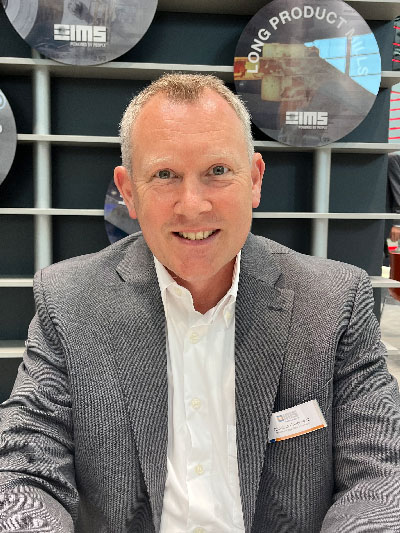 marketSTEEL: How is measurement and testing technology developing?
One clear trend is the shift of measurement methods from the laboratory directly into the production process. Processes that were previously only possible offline in the customer's laboratory must now be further developed so that they can be integrated into ongoing production in real time. Today, for example, we are able to record and use measurement data directly from a running heat treatment plant. Instead of analyzing random samples in the laboratory as before, we can now measure continuously during operation and make this data directly visible and usable.
Another example is our Inclusion Detection System (IDS). It not only recognizes internal inclusions in the material, but also detects the smallest optically undetectable surface defects and shell defects during the ongoing production process. We are currently developing this process further specifically for applications with greater strip thicknesses - such as in hot-dip galvanizing lines - in order to meet increasing market requirements.
This transfer of measurement technology to production generates large volumes of data. This data needs to be analyzed and converted into usable information - a process in which artificial intelligence (AI) plays a crucial role. Without AI, it would hardly be possible to process this data in such a way that it can be used effectively by customers or manufacturers.
marketSTEEL: How is AI used in practice?
A good example is our new MEVIweb Q3. [It acts as a central data collector and long-term memory for measured values and user information from all connected measuring systems. The server-based system makes it possible to analyze measurement data comprehensively. In the past, complex queries had to be programmed manually for evaluation. Today, AI enables the simple, free formulation of search queries. The relevant data is automatically identified, extracted from the database and made available to the user in a structured manner.
marketSTEEL: What role does measurement technology play in the smart factory?
Measurement technology has always played an important role in process control. Strip thickness measurements, for example, were used early on to control strip thickness. Today, thanks to a variety of specialized measuring systems, we provide significantly more data that our customers can use to optimize their processes. The importance of measurement technology continues to grow as customers expect increasingly detailed information about their material. This motivates us to continuously develop new and more precise systems.
marketSTEEL: What technical requirements does the trend towards lighter and functionalized materials entail?
The demands on the resolution and response time of measuring systems are constantly increasing. Especially with modern steel, aluminum and non-ferrous metal products, the tolerances are extremely tight. Our systems not only have to work extremely reliably, they also have to detect the smallest errors in real time. In doing so, we are increasingly coming up against physical limits. Nevertheless, we continue to successfully drive development forward in order to enable ever more precise measurements.
Sustainability is a key issue, especially in the steel, aluminum and non-ferrous metal industries. Our systems help customers to avoid rejects and use resources more efficiently. By precisely adhering to tolerances, production processes can be optimized, stabilized and accelerated. If faults are detected at an early stage, productivity can be significantly increased in rolling mills, for example.
 Another important topic is lightweight construction, for example in the automotive industry. Ever thinner and lighter sheets are being used here, but they still have to offer high stability. Our measuring systems support this trend by reliably detecting tight tolerances even with minimal material thicknesses.
marketSTEEL: How is IMS preparing strategically for the future?
IMS is an established supplier of assistance systems for the steel, aluminum and non-ferrous metal industries. In the future, we want to open up new market segments, for example with measuring systems for battery manufacturers. Our technology is ideal for testing thin copper and aluminum foils, such as those used in battery production. This is a strategic growth area that we are actively developing.
Customer requirements are constantly evolving. We monitor these developments closely and adapt our products accordingly. This keeps us at the cutting edge of technology and market economy.
Photos: marketSTEEL